01 / The Players
Meet the contenders
Together they represent a combined market capitalisation that would exceed the entire GDP of France.
Valuation & Revenue


Combined market cap at listing: ~$3.6 trillion
A Story in Numbers · Cross-document analysis
SpaceX is days from the largest IPO in history. Anthropic has filed confidentially. We read the S-1 and laid out the numbers.
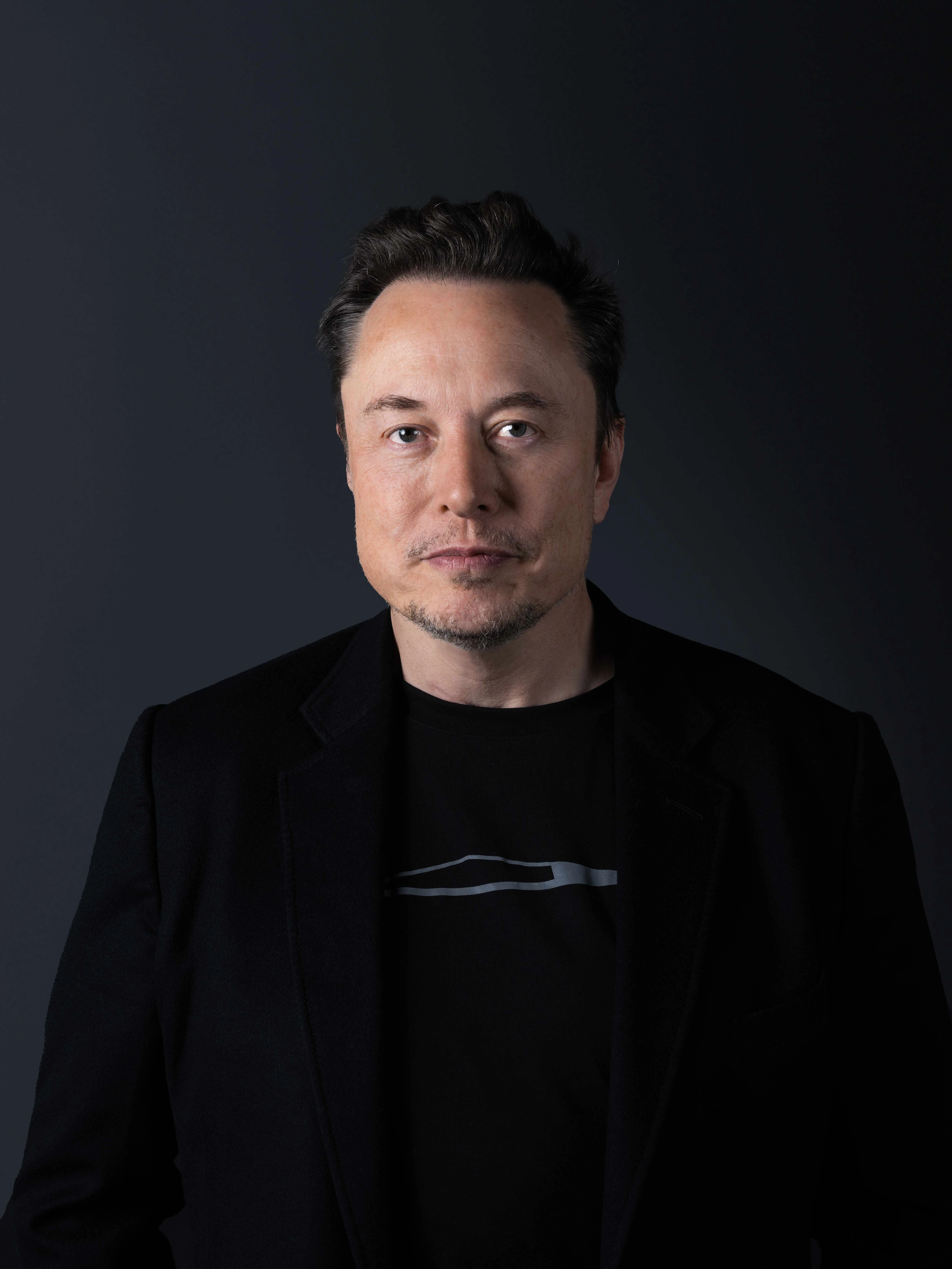
SpaceX
$1.77T
IPO June 12
Anthropic
$965B
Fall 2026
OpenAI
$852B
Fall 2026
01 / The Players
Together they represent a combined market capitalisation that would exceed the entire GDP of France.


Combined market cap at listing: ~$3.6 trillion
$1.77 trillion.
The largest IPO in history arrives June 12. SpaceX includes 4 giant businesses: rockets, Starlink, xAI, and X.
Some profitable, some capital hungry.
Revenue hit $18.7B in 2025, up 33% year-over-year.
Key figure
The S-1 consolidates SpaceX, xAI, and X under one entity. This makes direct comparison to prior private valuations nearly impossible.
AI cloud capacity
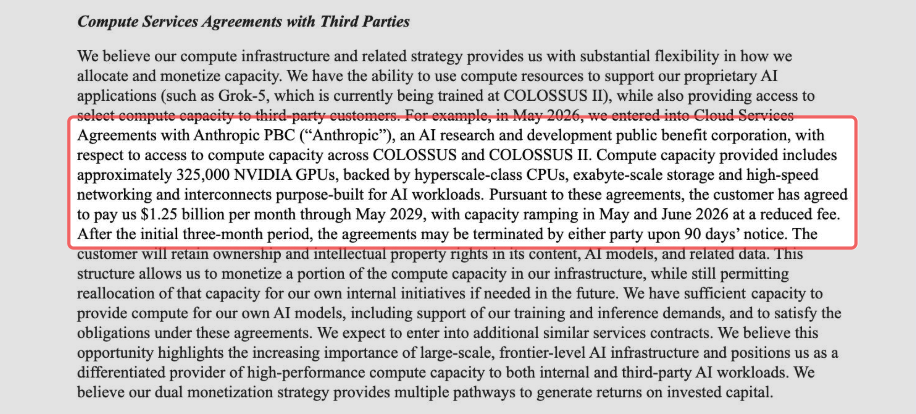
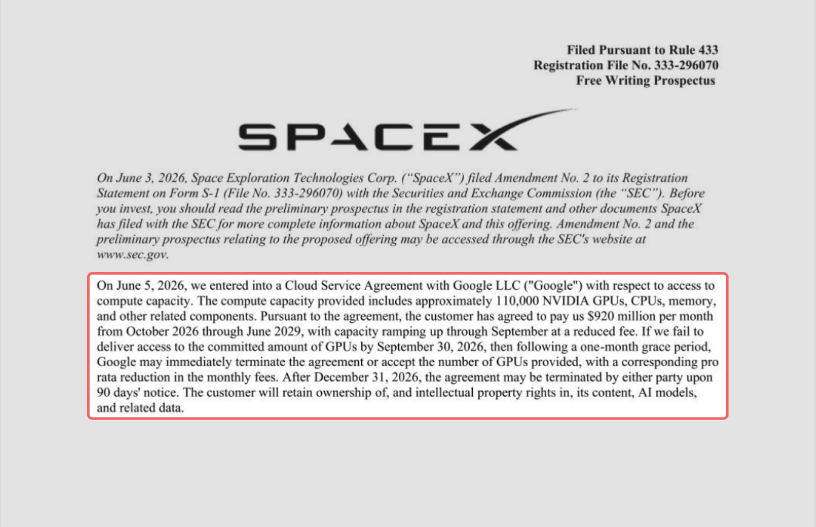
Two newly signed AI compute deals: Anthropic at $1.25B/month (~$15B/yr) and Google at $920M/month (~$11B/yr). Combined they would add ~$26B in annual revenue, more than doubling the current base. But neither is a locked-in annual contract, and two customers representing over half of pro-forma revenue is concentration risk at its starkest.

Combined market cap at listing: ~$3.6 trillion
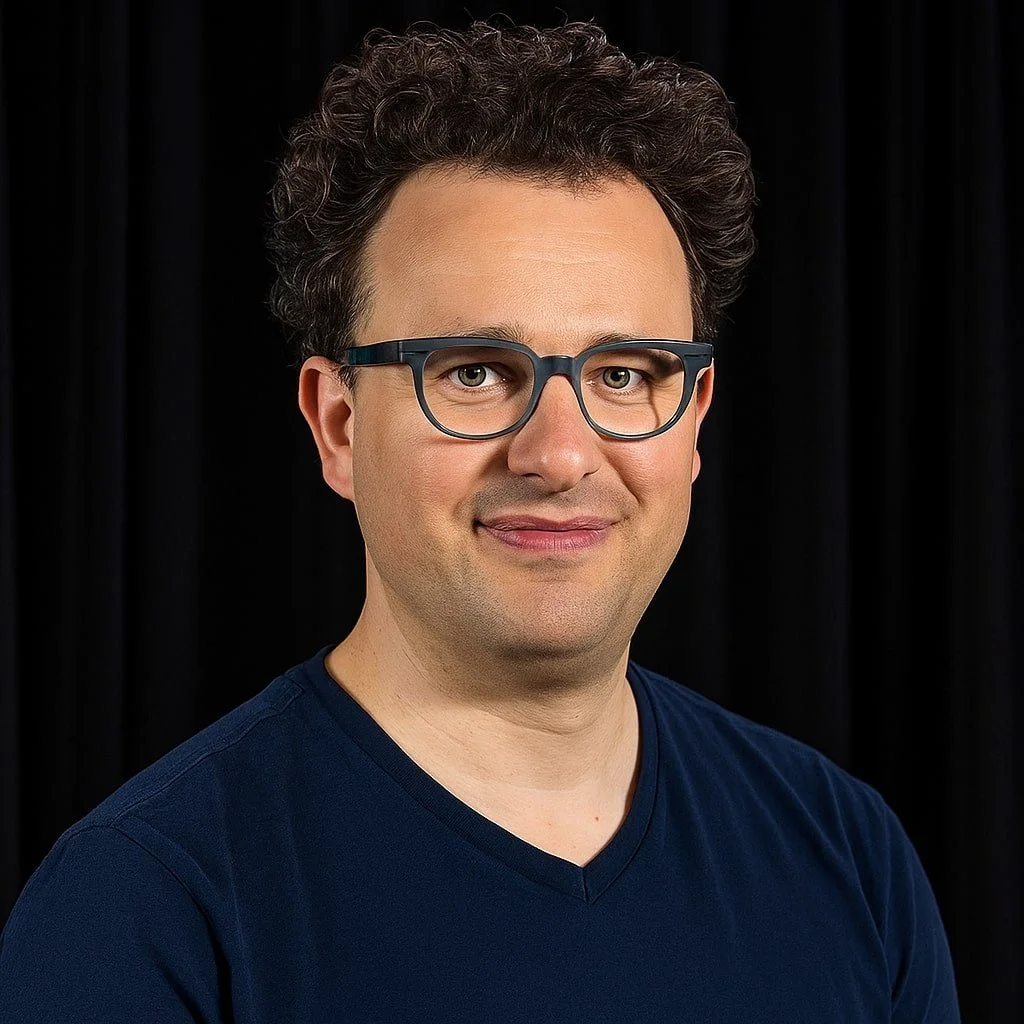
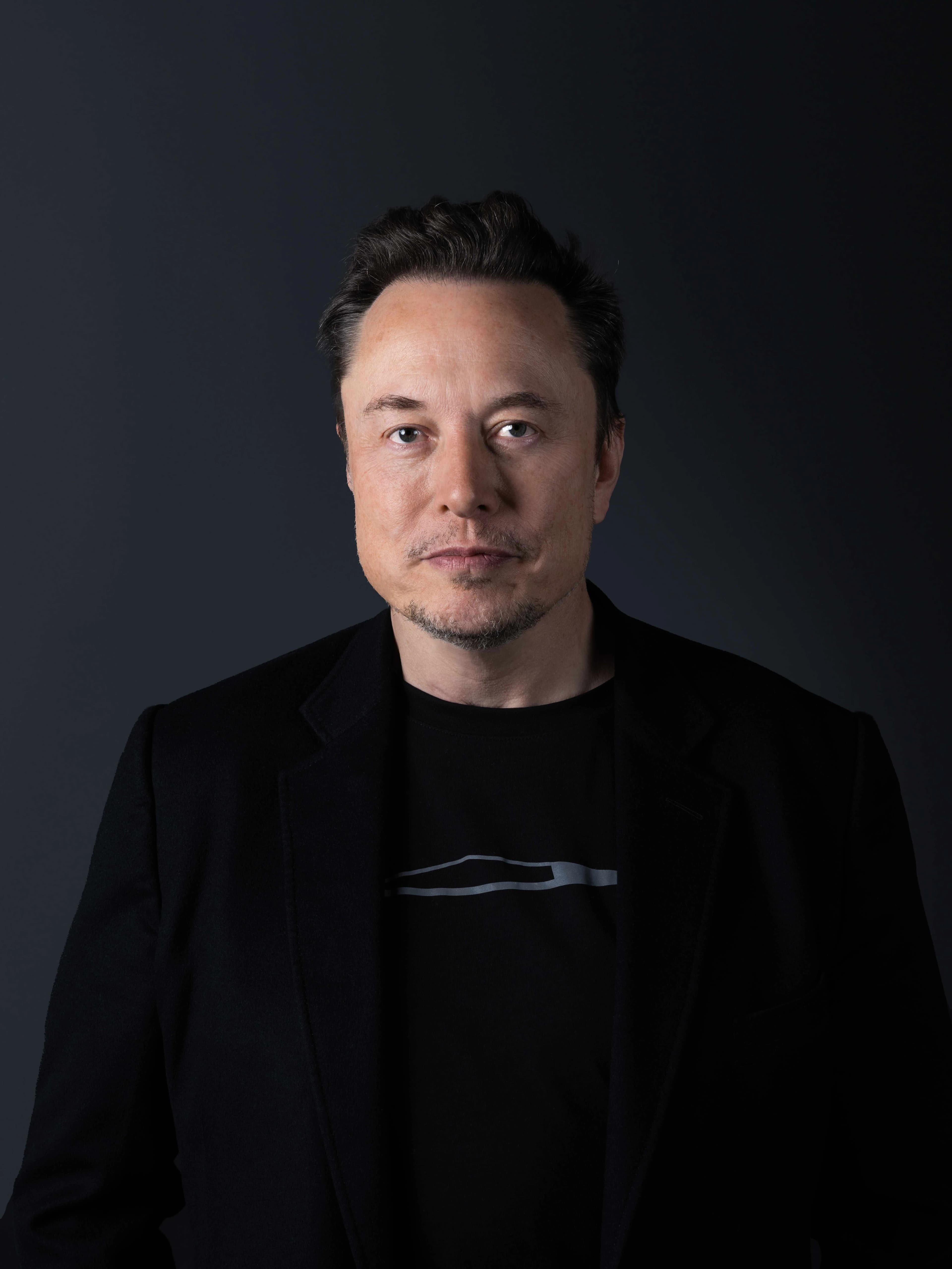
$965 billion.
The fastest revenue ramp in enterprise software history. From $100M to $47B ARR in two years, a growth rate of 422% year-over-year. The first profitable quarter is imminent.
Key figure
Both Amazon and Google hold significant stakes. The question is whether this creates or limits competitive positioning.

Combined market cap at listing: ~$3.6 trillion
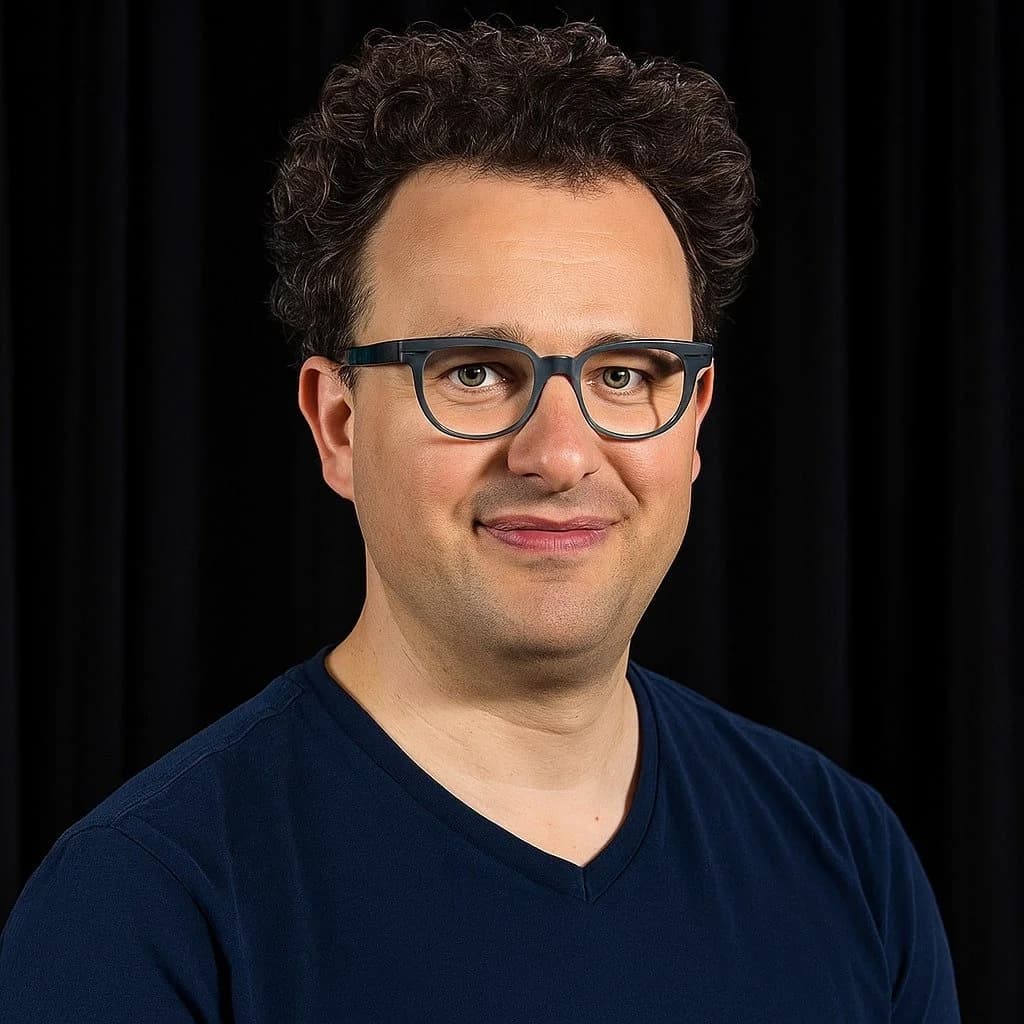
$852 billion.
Over 1 billion weekly users, a $122B raise, and yet still losing $8B a year. The bet here is scale: if OpenAI can keep its user base and cut inference costs, it becomes extremely profitable.
Key figure
Cash-flow positive projected by 2030. That’s four more years of burning billions before the model proves itself.

Combined market cap at listing: ~$3.6 trillion
02 / The Arms Race
The capital expenditure commitments are staggering. Between them, these three companies plan to spend over $500 billion on infrastructure between 2026 and 2029. Most of it on GPUs, data centres, and power.
03 / Red Flags
SpaceX’s AI revenue went from $0 to ~$26B annualized in a matter of weeks. Arguably that is even faster than Anthropic's growth. These contracts however, are carefully worded.
~$75B in two deals
Anthropic (~$45B) and Google (~$30B) together account for the vast majority of projected AI segment revenue.
$1.25B/mo
$920M/mo
Concentration risk
Google’s dual role as customer and ~5% equity holder (~$85B) adds another dimension. Neither deal is a locked-in annual contract.
The S-1 discloses a single customer committed to paying $1.25 billion per month through May 2029. However, it also comes with a 90 day notice mutual cancellation clause.
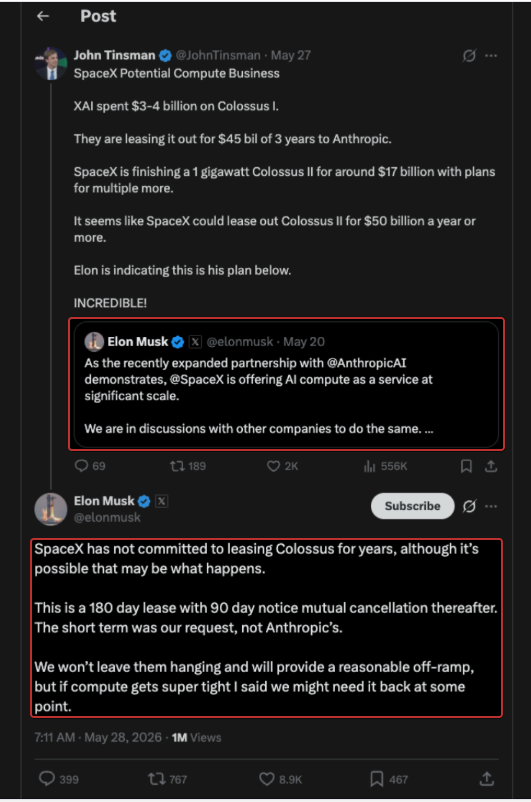
Musk was quick to point out on X that the agreement is not long term, after people started questioning xAI’s internal model building ambitions.
Either party can walk away with 90 days’ notice after the first six months. That’s not quite a locked-in $45B deal.
The S-1/A amendment adds a second major customer: $920 million per month for 32 months, totalling approximately $30B.
Google also holds a ~5% equity stake in SpaceX, valued at approximately $85B at IPO pricing. A customer, a shareholder, and a competitor.
Beyond concentration risk, the S-1 discloses six major risk domains spanning space operations, AI infrastructure, competition, talent, regulation, and governance. Click each risk category for details.
Each risk category links to a Parsewise project where every claim is traced back to the original filing page. See all risks with sources
Tap a category to explore
04 / Follow the Money
The growth trajectories here are unlike anything markets have seen. In 2022, Anthropic’s revenue was effectively zero. In 2026, it’s projected at $47 billion. How much further can it go?
All three companies (revenue only)
SpaceX shows the most traditional growth curve: hardware business with predictable scaling. Revenue grew from $4.6B in 2022 to $18.7B in 2025.
Expenditures have consistently exceeded revenue, and with the addition of xAI and X, the gap is only widening.
AI compute deals could double the top line
Anthropic’s $1.25B/month (~$15B/yr) and Google’s $920M/month (~$11B/yr) would add ~$26B in annual AI revenue, more than doubling SpaceX’s current $18.7B base. But these are not locked-in annual contracts: the Anthropic deal has a 180-day initial term with 90-day cancellation rights; Google’s is dependent on infrastructure buildout, and still has the 90 day opt-out. Two customers, no long-term lock-in, and together they’d represent over 50% of revenue.

Elon Musk · FY2022 to FY2026 (est.)
From near-zero to $47B ARR in under three years. It is simply mind boggling.
The question is whether this growth rate can continue, or if the markets will become saturated, and competition will catch up.
Worth noting: 2026 is the first year expenditure is expected to fall below revenue. This is coming at the same time as companies are clamping down on unlimited AI spend.

Dario Amodei · FY2022 to FY2026 (est.)
OpenAI’s trajectory is the most alarming. Revenue of $30B (projected 2026) against expenditure of $55B. The bet is that demand will scale up faster, and the reserved compute will offer an upper hand over Anthropic.
The same crucial question applies: will the market demand keep growing faster than the competitive products?

Sam Altman · FY2022 to FY2026 (est.)
05 / Global Reach
These aren’t just Silicon Valley startups anymore. Between them, they employ over 30,000 people across five continents. Their office footprints reveal strategic priorities — and regulatory exposure.